Coloring won't make a genius: the real benefits for toddlers
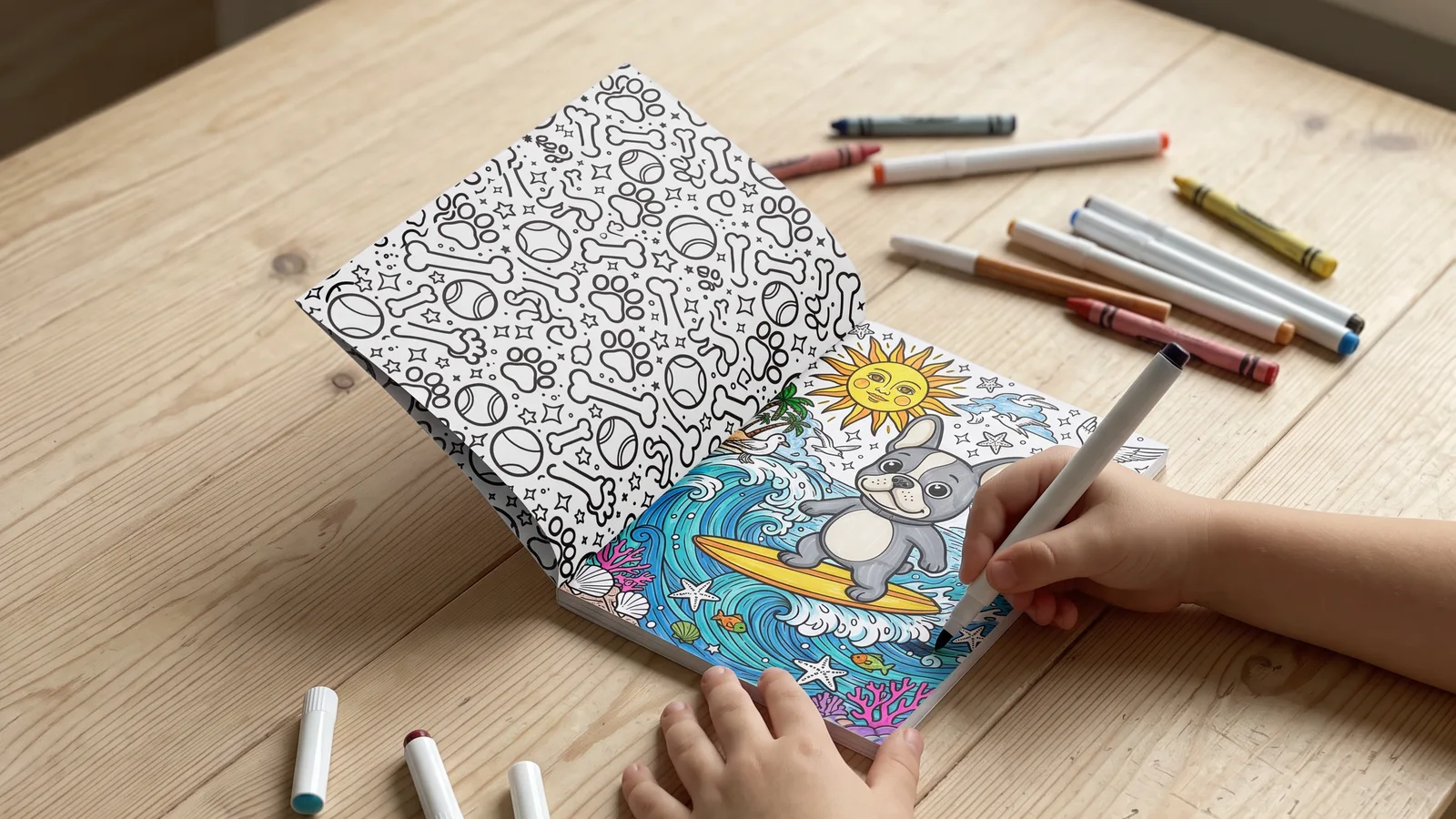
Coloring gives toddlers and preschoolers practice with skills that appear on the CDC milestone lists, such as scribbling, drawing a circle and gripping a crayon with the fingers. It also gives you a quiet way to sit together. We have not found a strong study showing that coloring itself improves development, so we will not promise that it does.
Why we are starting with a disclaimer
Search for this topic and you will find long lists: better focus, better grades, less stress, future handwriting. Those lists rarely tell you where the claim came from. Meanwhile you are at the kitchen table with a tired child, a box of broken crayons and twenty minutes before dinner, and all you want to know is whether this is a good use of those twenty minutes.
If you buy the big promises, the table can become a task. You sit there checking for progress that nobody can measure, and the child notices. So here is the shorter, truer list.
What we can say with a straight face
- It is practice. The CDC lists scribbling at 18 months, a circle at 3 years “when you show him how”, and a finger grip on a crayon or pencil at 4 years. Coloring is one ordinary way to use those skills. That is our reasoning; the CDC does not recommend coloring as such.
- It is a place for choices. Which color, which part first, when to stop. Small decisions that belong to the child.
- It is time beside someone. This one matters most to us.
The page as a place to talk
The psychiatrist Daniel Siegel and the psychotherapist Tina Bryson explain that when something painful or scary happens to a child, one of the best ways to help is to tell the story again, in order. They add that it tends to work better while doing something else, and that it can be drawn. A 4 year old in one of their examples makes an illustrated book with her father about a hard day at nursery school, then asks to read it over and over. Between ages 3 and 6, they say, the adult carries the voice and offers the story for the child to continue. If the child does not want to, you do not force it.
They are talking about telling and drawing what happened, not about coloring books. The link to the coloring table is ours. We apply it like this: when the crayons are out and hands are busy, a hard moment from the day sometimes comes up more easily.
Try this today
- Sit down, and color too. Do not supervise from across the room.
- Start the story yourself. “Today at the park you fell off the swing. What happened next?”
- Leave a gap. If they carry on, listen. If not, finish it yourself or simply keep coloring.
- Draw it, if they like. The fall, who helped, how it ended.
- Stop while it is still fun. Ten minutes is a perfectly good session.
Coloring will not fix a hard day, and a big feeling may still be there afterward. What helps is you, at the table. If something about your child’s wellbeing worries you, talk to your pediatrician.
Where Mariano comes in
Our books are made for this kind of table: Volume 1 is a birthday party, and Volume 2 follows the friendliest lucky cat in Japan. If you would rather try before buying, a free page is yours to print.
Tonight, color one corner together and ask: “What was the best part of today, and what was the hardest?”