Scribbling outside the lines? When kids really start coloring
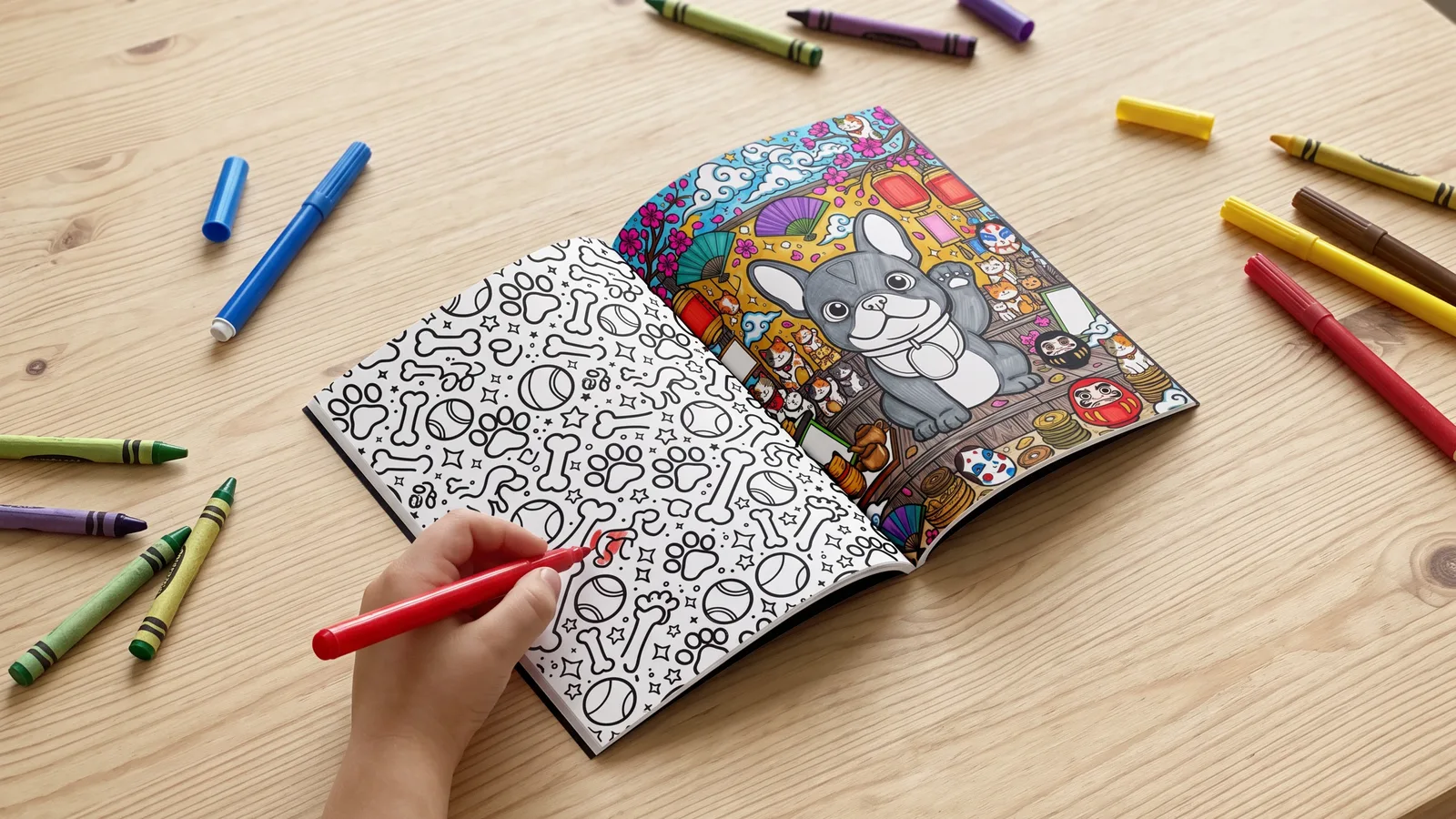
Most children scribble by about 18 months, and by age 3 many can draw a circle once you show them how. Around 4, the crayon usually moves from a fist to the fingers and thumb. Coloring inside the lines has no official age: the CDC milestones do not list it at all.
The page that went wrong
Your three year old takes a purple crayon to a picture of a birthday cake. The purple travels across the cake, over the table in the drawing, and off the edge of the paper. Then comes the look up, proud, waiting for you. Next door, a cousin of the same age is carefully filling in a balloon, and you catch yourself wondering whether you should be doing something.
It is an easy thing to wonder about. Few of us remember how we learned to hold a crayon, and every child seems to arrive at it on a different day. If you start correcting the page, though, the crayon can turn from a toy into a test, and a child who was happy a minute ago may simply stop.
What the milestones actually say
The CDC publishes developmental milestones by age. These are the ones that touch on drawing, in the CDC’s own terms:
- 18 months: scribbles.
- 3 years: draws a circle, when you show him how.
- 4 years: draws a person with three or more body parts, and holds a crayon or pencil between fingers and thumb, not in a fist.
- 5 years: writes some letters in her name.
Read that list again and notice what is missing. The 2 year page has no drawing milestone, and no page mentions staying inside the lines. So anyone who gives you an exact age for it is offering an opinion, and that includes us. What we can say is that the skills underneath it, a finger grip and some control over where the line goes, appear on the list later than a first circle.
What to do when the purple leaves the cake
The psychiatrist Daniel Siegel and the psychotherapist Tina Bryson explain that when a child is upset, logic often will not work until the feeling has been answered. They describe two steps: first connect, with your body, face and voice, then redirect with words. If a page has ended in frustration, that order helps. Sit down at their level and say what you see before you offer any advice.
We apply it to coloring like this. These are our suggestions, not theirs:
- Describe, do not grade. “You used so much purple” works better than “stay inside.”
- Show one circle, then hand the crayon back. The CDC wording is “when you show him how”, so showing is part of the skill.
- Offer big spaces first. Small details are a job for a grown up helper, or for later.
- Color side by side. Take your own corner of the page, and go outside the lines sometimes too.
- If tears come, stop. The page will still be there tomorrow.
Children get there on different days, and interest comes and goes. If you are worried about your child’s hands, drawing or development, your pediatrician is the right person to ask.
Try a page today
Our free printable pages are the easy place to practice, with nothing to lose. Try Mariano’s birthday page. It has lots of small details, so pick one big shape, such as the party hat, and color only that.
Then ask your child: “What color should Mariano’s hat be tonight?” Their answer is the only rule on the page.