Four minutes and done? Coloring books for 3 year olds that fit
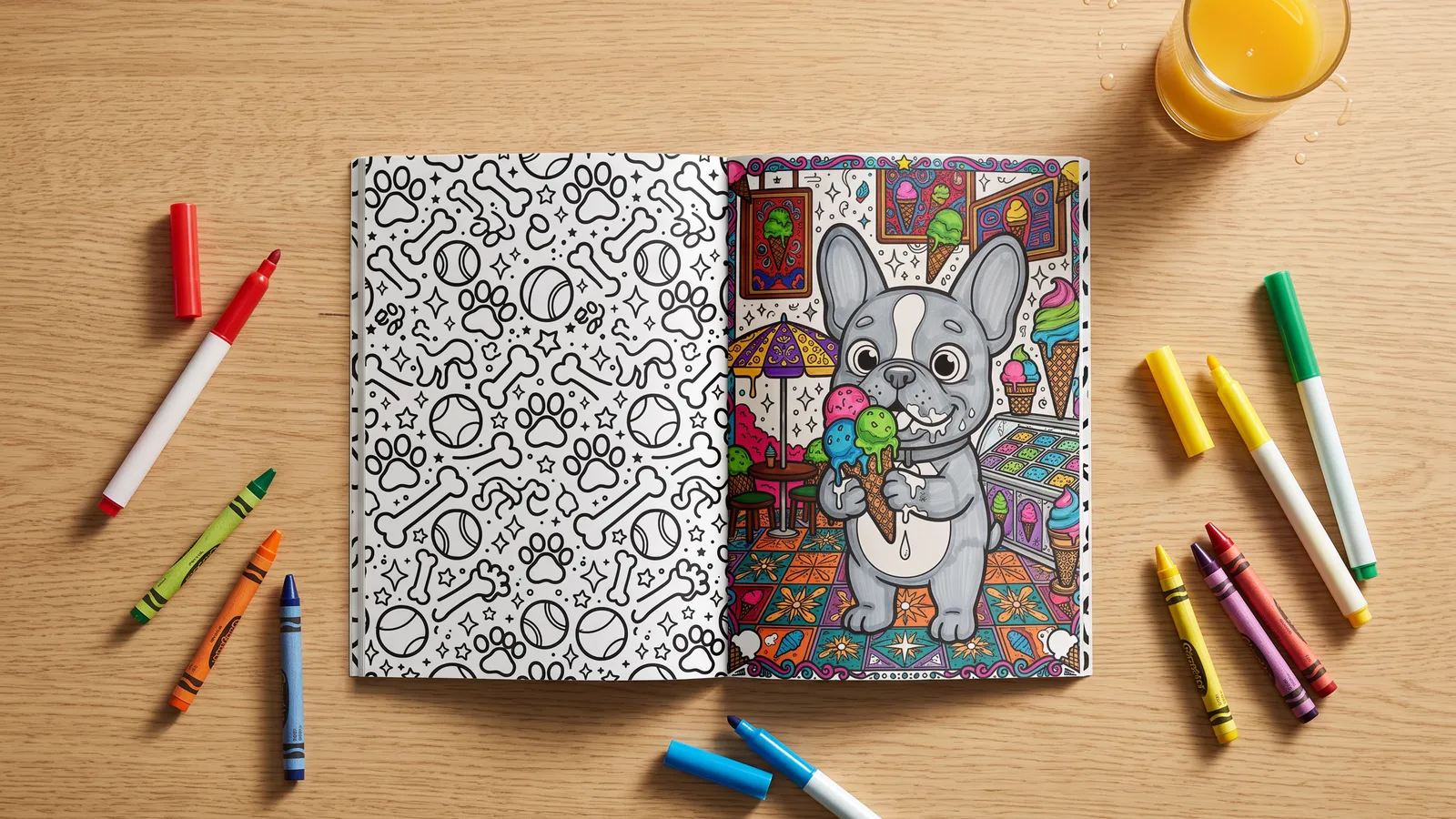
A good coloring book for a 3 year old has bold outlines, large shapes that a fist grip can reach, and a subject your child already loves. Quantity matters less than you might expect, since one page may last a few minutes. These are our practical criteria: we know of no official standard for this age.
The page that lasted four minutes
Your son opens his new book, chooses orange, and attacks a fire truck. Four minutes later he announces that it is finished. There is orange on about a third of the truck. He turns the page, then turns six more, then wanders off to find the cat.
You may wonder if the book was wrong, or if he is. Most likely neither. The trouble comes if we expect a finished picture, because then a happy scribble starts to look like a failure, and the table gets tense for no good reason.
What 3 year old hands are up to
The CDC lists drawing a circle, when you show how, as a milestone for age 3. Holding a crayon between fingers and thumb, not in a fist, appears on the list for age 4. So a typical 3 year old may still be working with a fist grip, and tiny spaces ask for something the hand is still learning. That step from the milestones to the page is our reasoning, not the CDC’s.
What to look for
- Thick outlines. They give the eye a clear shape, even when the crayon wanders across them.
- One clear main character. Something to name and talk about.
- Big areas. A crayon should fit inside easily.
- A subject with a story. A party, a dog, a bus. More on that in how to choose by age.
- A sturdy tool to match. See our notes on toddler supplies.
What can you skip? Long instructions, and any promise that a book will teach a skill by a certain date.
Let the three year old be the boss of the page
The psychiatrist Daniel Siegel and the psychotherapist Tina Bryson explain that deciding is one of the skills a child builds by using it, and that between 3 and 6 it helps to let them decide, especially when it is hard. They also suggest asking children to predict what happens next when you read together.
We apply it like this. These steps are ours:
- Ask before you suggest. “Where do you want to start?”
- Let finished mean finished. If they say it is done, it is done.
- Take the small parts yourself. When a page is too detailed, you color the tiny bits and they color the big ones.
- Talk about the picture. “What will the dog do next?” We have a whole list of questions for the coloring table.
Your child may still leave after four minutes, and that is fine. If anything about their hands or development worries you, ask your pediatrician.
An honest word about our books
Our books are for ages 2 to 6, with clear lines and a large 8.5 x 11 inch format, but the pages are also full of detail. For a 3 year old, that means choosing one big shape and sharing the rest with you. Volume 1, the birthday party, is a natural place to start. If you want to test the level first, print the free birthday page.
Today, point at the page and ask: “What is Mariano going to do after the party?”