More than the number on the cover: how to choose coloring books by age
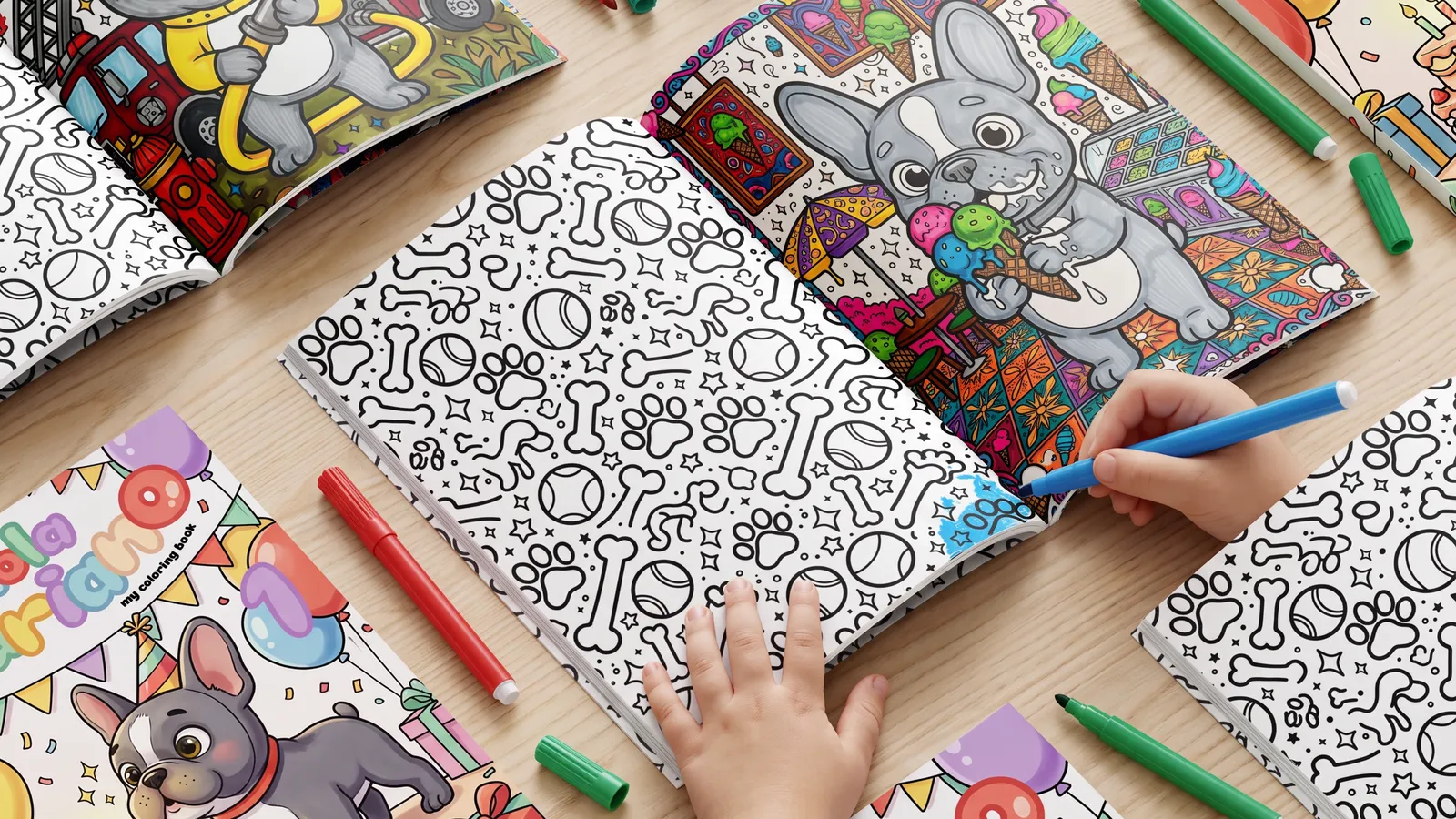
To choose a coloring book by age, look at what your child’s hand can do today rather than the number on the cover. Around 2 and 3, pick big, simple shapes. From about 4, when many children hold a crayon with their fingers, more detail starts to make sense. We know of no official standard for this, so what follows is our practical judgment, built on CDC milestones. Safety warnings on a package are a different matter: always follow those.
Standing in front of the shelf
You open an online store and find hundreds of books marked “ages 2 and up”. Some have three fat shapes on a page. Others look like a wallpaper sample. Your child is somewhere in between, and the only thing you know for sure is that last week’s book lasted four minutes.
Get it wrong and nothing terrible happens. A page that is too hard can simply end in “you do it”, and one that is too easy gets ignored. Still, a good match makes the afternoon easier for everybody.
A rough guide by age
Treat these as starting points. The milestones come from the CDC. The book advice is ours.
- Around 18 months: scribbling is a CDC milestone. A blank sheet does the job, so a book can wait.
- Age 2: the CDC page has no drawing milestone, though it suggests giving your child crayons or finger paint. Look for one large shape per page and plenty of empty space.
- Age 3: drawing a circle when you show how is on the list. Look for bold outlines and a clear main character. We go deeper in our guide for 3 year olds.
- Age 4: holding a crayon between fingers and thumb, and drawing a person with three or more body parts. Smaller areas and simple scenes start to work.
- Age 5: writing some letters of their name. Busy scenes can be fun, and so can adding a title to the page.
Children arrive at each step on different days. If your 4 year old prefers big shapes, stay with big shapes.
Four things to check besides the age
- Line and space. Open the preview. Can your child’s crayon fit inside the main shape?
- Paper and printing. Thick or thin paper matters less than you might think, and if you use markers it is worth putting a sheet underneath.
- What they will color with. A book and its tools go together, so see our notes on supplies for toddlers.
- The subject. A dog, a truck, a birthday. Interest often beats difficulty.
Let them make the final call
The psychiatrist Daniel Siegel and the psychotherapist Tina Bryson explain that the part of a child’s mind that decides grows stronger with practice, and that parents are tempted to decide for them. With little ones, they say, choosing between two pairs of shoes is enough.
We apply it to coloring books like this: you pick two that fit, your child picks one. If the choice ends in a refused book, read what to do if your child does not like coloring. If it ends in a happy table, try some questions to ask while you color.
Where our books sit
Our two books are for ages 2 to 6, with 53 drawings each on 8.5 x 11 inch pages, printed on one side. The drawings are large but detailed, so a 2 year old will need you beside them and a 6 year old has more to find. Volume 1 is a birthday party and Volume 2 follows a lucky cat in Japan. To see if the detail suits your child before buying, print a free page first.
Tonight, put two pages side by side and ask: “Which one do you want to color?”